



An educator's guide
School Kayaking Program
Structured across three developmental stages, each designed to align physical activity with age-appropriate learning outcomes in safety, technical skill, teamwork, and environmental stewardship.
Three stages
Matched to year level, not just ability
Below, educators will find an abstract summarising each stage, followed by a detailed breakdown of program structure and learning outcomes.
An educator's guide
Stage 1 · Years 4–5 · ages 9–11
Splash & Giggle
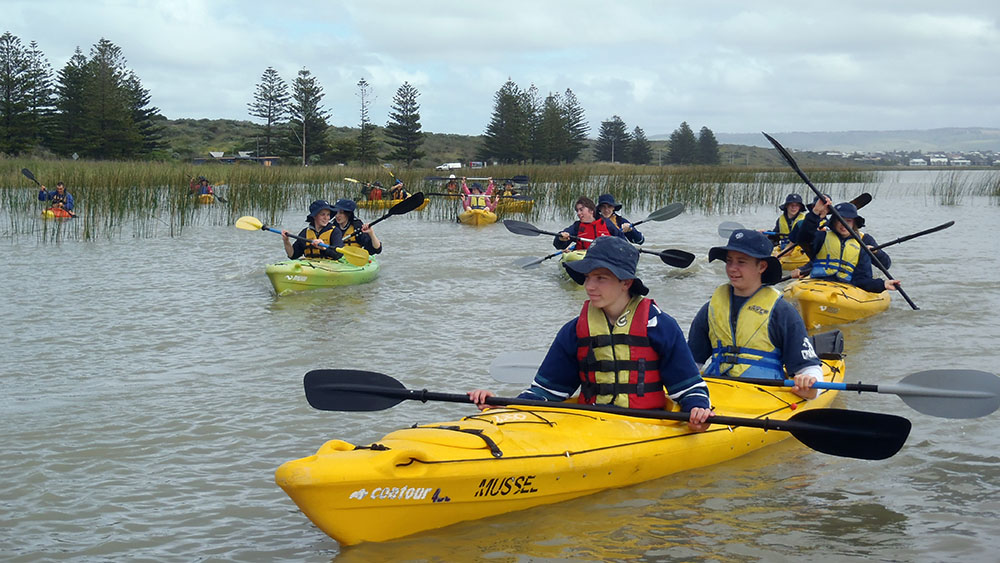
This introductory stage shifts young students from recreational water play toward foundational technical skill and physical literacy. Over a two-hour session, students build water confidence through guided instruction in paddling basics, safety procedures, and environmental awareness — all delivered through games and challenges that keep engagement high. Rather than technical mastery, the focus is on establishing a safe, positive first relationship with the water that supports children's physical fitness, mental well-being, confidence, and social development.
Program structure
- Safety First Certified instructors experienced in kayaking and first aid lead a thorough safety briefing before any water activity. Students learn correct life jacket fitting and emergency procedures.
- Skill Development Students are introduced to basic paddling techniques, including forward and reverse strokes, turning, and stopping.
- Environmental Education Lessons connect students to the local ecology of the water bodies they explore, introducing the importance of preserving natural habitats.
- Fun and Games Instructors use games and challenges to make learning enjoyable and memorable.
Key benefits
- Physical Fitness Builds strength, coordination, and overall fitness.
- Mental Well-being Reduces stress and promotes positive mood through outdoor adventure.
- Confidence Building Mastering new skills builds self-esteem.
- Social Skills Fosters teamwork and communication among peers.
- Connection with Nature Cultivates environmental responsibility and stewardship.
Stage 2 · Years 6–8
Essential Basic Skills
Building on early water confidence, this stage introduces structured technical skill development and formalised safety protocols. Students learn core paddling mechanics, equipment terminology, and capsize recovery procedures, while also developing personal and social capabilities such as tandem cooperation and resilience. The program integrates directly with Science and Geography curricula through weather assessment and ecosystem study, positioning kayaking as a vehicle for both physical and academic growth.
Movement competence & basic paddling technical skills
Students learn to control their movements and manipulate equipment in a calm water environment.
- Equipment Identification Recognising key terminology — bow, stern, hull — and correct paddle handling.
- Directional Control Paddling forward in a straight line, reversing, stopping to avoid collisions, and basic sweep strokes for turning.
- Posture and Balance Maintaining stable seating posture and using torso rotation to power the paddle.
- Launching and Embarking Safely entering and launching a kayak from a bank or shallow shoreline.
Water safety & emergency preparedness
The most critical outcome for this age group, teaching risk management under supervision.
- Personal Floatation Devices (PFDs) Correctly fitting, securing, and checking life jackets for themselves and peers.
- Controlled Wet Exits (Capsize Drill) Remaining composed during a capsize, keeping hold of the paddle, and exiting safely.
- Deep Water & Shore Recovery Basic steps for guiding an upturned kayak to shore or assisting an instructor.
Personal and social capability (teamwork & resilience)
Kayaking accelerates social development, confidence, and emotional regulation.
- Tandem Cooperation Synchronising paddling rhythms and sharing roles in pairs.
- Spatial Awareness & Communication Maintaining distance between watercraft and practising on-water courtesy.
- Resilience and 'Challenge by Choice' Overcoming fear of deep or moving water and building grit through personal goal setting.
Environmental connection & stewardship
Ties physical activity directly into Science and Geography learning.
- Weather and Hazard Assessment Observing conditions like wind and currents to judge paddling safety.
- Ecosystem Awareness Identifying local aquatic flora, fauna, and water systems.
- Minimal Impact Practice Applying Leave No Trace principles to respect natural habitats.
Stage 3 · Years 9–12
Advanced Kayaking & Expedition Skills
For adolescents, kayaking becomes a platform for independence, leadership, and advanced risk management. Students refine technical paddling skills while developing the cognitive capacity for dynamic risk assessment and real-time problem-solving in changing conditions. As sole captains of their own vessels, teenagers gain autonomy and self-trust, while peer rescue training and group leadership roles build empathy and responsibility. The program supports emotional regulation and stress management alongside physical fitness, preparing students for both personal growth and mentorship of younger paddlers.
Physical development & technical skills
- Motor Skill Mastery Precision paddle strokes, bracing techniques, and vessel control using core and upper body.
- Spatial & Environmental Awareness Practical understanding of currents, wind patterns, and changing weather conditions.
- Physical Fitness Cardiovascular endurance, core strength, balance, and full-body coordination.
Cognitive & risk management skills
- Dynamic Risk Assessment Continuously evaluating hazards such as submerged rocks, fast-moving water, or boat traffic.
- Real-Time Problem Solving Making quick, independent decisions during unexpected capsizes or changing currents.
- Environmental Literacy Firsthand appreciation for aquatic ecosystems, conservation, and Leave No Trace principles.
Emotional & personal growth
- Resilience and Confidence Overcoming fear of capsizing and mastering wet exits builds self-trust and mental grit.
- Autonomy and Independence Sole responsibility for their own boat fosters agency and accountability.
- Stress Regulation Time in natural environments promotes mindfulness and helps manage academic and social stress.
Social & leadership skills
- Peer Cooperation Clear communication, pacing, and group cohesion during tandem paddling or expeditions.
- Rescue & Safety Protocols Performing T-rescues and assisting capsized peers, building empathy and mutual responsibility.
- Leadership Opportunities Experienced students guide the group, set pace, and manage group dynamics on the water.
Testimonials
What schools say
Fantastic school camp by the river! Excellent amenities, engaging activities, and beautiful scenery. Perfect for outdoor learning and adventures.Mrs JohnstonGreenfield Primary
As the principal of our primary school, I highly recommend this camp. Our students learned to paddle canoes and enjoyed excellent amenities by the river. A fantastic outdoor learning experience!Mr M. Smith, PrincipalSunshine Coast Primary
Our Climate Explorers Camp was enlightening! Students engaged deeply, learned sustainability, and developed actionable climate solutions. Highly recommended!Ms Lee, Year 6 TeacherRiverbend Primary
Planning next year's camp?
Tell us year levels, group size and dates — we'll build a program around your learning outcomes.
Enquire about your group